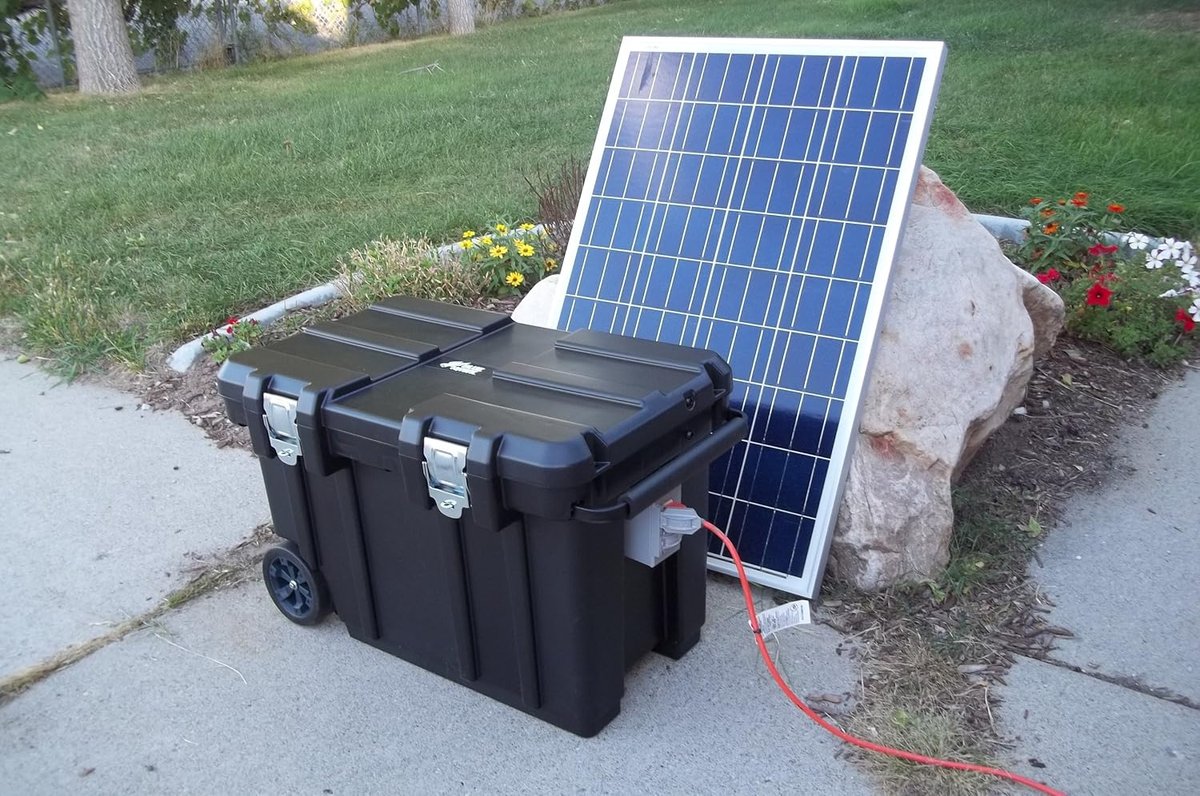
Imagine having reliable, emission-free power wherever you go – whether you're off-grid camping, preparing for an emergency, or simply powering tools in your backyard. That's the promise of a solar generator, a portable powerhouse that’s rapidly changing how we think about backup and mobile electricity. Forget the noisy, fuel-guzzling gas generators; solar generators offer a clean, quiet, and increasingly powerful alternative.
This comprehensive guide is your starting point to understanding, choosing, and maximizing the potential of these incredible devices. We'll demystify the technology, highlight top models, and equip you with the knowledge to make an informed decision, connecting you to deeper dives into every aspect of solar power.
What is a Solar Generator and Why You Need One
At its heart, a solar generator isn't a power-creating machine in real-time, but rather a sophisticated, large battery pack – known as a power station – designed to store energy. When paired with solar panels, it captures the sun's energy, converts it, and holds it for whenever you need it. This elegant system provides a clean energy solution for a myriad of needs, from remote work and van conversions to tailgating and crucial home backup during outages.
The advantages are compelling: they’re easy to use, boast lower long-term costs due to free fuel (sunlight), and operate silently without producing any harmful emissions. They're a truly eco-friendly way to keep your essential devices and even larger appliances running, offering peace of mind and incredible flexibility.
Decoding the Power: Essential Solar Generator Specs to Know
Before diving into specific models, it’s crucial to grasp the fundamental concepts that define a solar generator's capabilities. Understanding these terms will empower you to compare units effectively and choose one that truly meets your demands. To go deeper, we encourage you to Understand solar generator specs. Learn solar to truly become an expert.
- Watts (W): The Instant Power Measure. This tells you how much power a generator can deliver or receive at any given moment. If your microwave needs 900W, your generator's output must be at least that. Similarly, a higher input wattage means faster charging from solar panels or wall outlets.
- Watt-hours (Wh): The Storage Capacity. This metric indicates the battery's total energy storage. Think of it like a car's fuel tank; more Wh means longer runtime for your devices. One watt-hour equals one watt flowing for one hour.
- Runtime Calculation: How Long Will it Last? A simple formula helps estimate operation time: Generator Wh / Device Watts = Approximate Hours of Operation. Keep in mind that real-world runtime can be slightly less than manufacturer claims due to efficiency losses.
- Battery Technology: LiFePO4 Leading the Way. While traditional lithium-ion batteries are still common, Lithium Iron Phosphate (LiFePO4) technology is gaining traction. LiFePO4 batteries offer significantly longer lifespans (more charge/discharge cycles), enhanced safety, and often faster charging, though they typically add a bit more weight to the unit.
Finding Your Perfect Match: Key Considerations Before You Buy
Choosing the right solar generator is about aligning its capabilities with your specific needs. There are several critical factors to weigh before making a purchase. For a more detailed walkthrough, our comprehensive Solar Generator Buying Guides can provide all the information you need.
- Capacity (Wh): How Much Power Do You Need? This is perhaps the most important factor, directly determining how long your devices can run. Useful generators range from a few hundred watt-hours for small electronics to several thousand for extended home backup or heavy-duty tools.
- Charging Capability: Keeping Your Generator Juiced. Look for versatile charging options – solar panels, wall AC outlets, and vehicle 12-volt ports are standard. Pay attention to the input capacity (W); higher wattage means quicker recharging. Always ensure your solar panel wattage is compatible with your power station’s input range to prevent damage.
- Output Capability & Ports: Powering All Your Gear. A high output wattage is vital for running multiple devices simultaneously. Aim for at least 300W, or 500W+ for larger tasks. Equally important is a variety of ports, including multiple AC outlets, USB-A, USB-C, and even 30A/50A RV plugs for specialized needs.
- Portability: Power On the Go. If you plan on moving your generator frequently, portability is key. Units can range from a lightweight 7 pounds to a hefty 100 pounds, typically the size of one to three shoeboxes. Features like integrated wheels and sturdy handles drastically improve ease of transport for heavier models.
- Durability: Built to Last. Especially for outdoor adventures or emergency preparedness, a robust build quality is essential. Look for units designed to withstand the elements, and always check customer reviews and field tests to verify their resilience.
- Cost: Balancing Features and Budget. Solar generators represent a significant investment, but prices vary widely. Keep an eye out for major shopping holidays like Amazon Prime Day or Black Friday, when substantial discounts are often available.
Top Solar Generators: Our Expert Picks & Reviews
We've scoured the market and gathered insights from authoritative sources like PopSci and Popular Mechanics to bring you a curated list of the best solar generators, categorized to help you find your ideal portable power solution. To compare top solar generator brands and make an informed decision, Berikut beberapa pilihan: Compare top solar for in-depth analysis.
Best Overall Performers
- Bluetti Elite 200 v2 (PopSci's Best Overall): A superb all-rounder with 2,073 Wh capacity and 2,600W running output (3,900W surge). Its LiFePO4 battery offers over 6,000 cycles, and it boasts fast 1,800W wall charging (0-full in ~90 min) and 1,000W solar input. Durable, user-friendly app, and a practical squared design make it a standout.
- Jackery Explorer 1000 v2 (Popular Mechanics' Best Overall): With 1,070 Wh and a LiFePO4 battery (4,000 cycles), this unit is ideal for smaller items and off-grid camping. It features three AC, two USB-C, one 12V car, and one 18W USB-A port, offering a good balance of capacity and portability for many users.
High-Capacity & Home Backup Solutions
For those needing serious power for extended periods or home emergencies, these generators truly shine. When considering specific needs, you might want to explore our deeper analysis of Best Solar Generators by Use.
- EcoFlow Delta 3 Ultra Plus: A high-capacity beast offering 3,072Wh (expandable), 3,600W running (X-Boost to 4,600W, 7,200W surge). It charges incredibly fast (as little as 89 minutes) with six options, including a 30A RV outlet and Storm Guard Mode for automatic charging based on weather. Features sturdy handles and telescoping wheels.
- Jackery Explorer 2000 Plus: Still a great choice with 2 kWh capacity (expandable) and up to 6,000W output for brief, high-draw tasks. Its LiFePO4 battery offers 4,000 cycles to 70% health, and at 61 lbs, it's made portable with integrated wheels, a handle, and chunky grips.
- EcoFlow Delta Pro (Popular Mechanics' Best Large-Capacity): This unit rivals gas portable generators, powering a full-size refrigerator for over 51 hours in tests. It charges quickly (2.5 hours via standard outlet, also compatible with EV charging stations) and accepts up to 1,600W solar input.
- Jackery HomePower 3000: Offering 3,000Wh, this model features ZeroDrain tech for reliable charge retention during long-term storage. It boasts an improved size-to-capacity-to-performance ratio, making it smaller and lighter than many comparable high-capacity models.
- Bluetti Apex 300 (Best for Off-Grid Living): Known for its huge, highly expandable storage and scalable wattage output, this unit offers standard dual 1,200W solar input, making it excellent for serious off-grid setups, though it is quite heavy.
Best for Specific Use Cases
- Anker Solix C800 Plus (Best for Car Camping): Shoebox-sized and weighing 24 lbs, this compact unit provides 768Wh capacity and 1,200W output. It charges in about 3 hours with a 300W solar panel and features an integrated magnetic lantern with three light modes.
- Goal Zero Yeti 1000 Core (Still Good for Van-Living): With 1,000Wh capacity, it's known for faster solar replenishment and a hearty build quality with a tough exterior shell. It strikes a good balance of power storage and portability for mobile lifestyles.
- Goal Zero Yeti 500 (Popular Mechanics' Best Value): Similar to the previous 500X model, this unit offers 500W output (1,000W surge) with a more efficient LiFePO4 battery. It charges in less than 90 minutes via AC and is rugged, IPX4 water-resistant, shockproof, and maintains output below zero.
- Anker Solix F2000 (Popular Mechanics' Best On Wheels): Designed for heavy-duty mobility, it features robust wheels and a telescoping handle. It boasts 12 ports, including two car ports, an RV-specific outlet, four AC ports, three USB-C, and two USB-A, supporting up to 1,000W solar input.
Fast Charging & Port-Rich Options
- EcoFlow Delta 2 Max (Fastest Charging): Offers 2,048Wh (expandable to 6kWh) and charges to 80% in just 43 minutes with 1,000W solar panels or 1.1 hours via wall outlet. It includes six AC outlets and weighs 51 lbs with chunky handles.
- DJI Power 2000 (Best for Lots of Ports): A powerful unit with 2,048Wh capacity and 3,000W running wattage. It boasts an impressive 13 total ports: four AC, four USB-A, four USB-C, and a 30A plug. Note its battery capacity drops to 80% after 4,000 cycles, slightly less than some competitors.
- EcoFlow Delta 3 (Popular Mechanics' Most Ports): With 1,024 Wh capacity and up to 1,800W output (X-Boost to 3,600W), it provides 13 total ports, including fast-charging USB-C and USB-A outputs. Its LiFePO4 battery and built-in UPS are great features, though capacity is less than its predecessor and the mobile app login can be tricky off-grid.
- Bluetti AC180 (Popular Mechanics' Best Mid-Size): Features 1,152 Wh capacity and 1,800W output (2,700W peak) with four AC outlets. It supports up to 500W solar input and offers a fast charging mode (80% in 45 minutes, use sparingly). Five USB ports (one 100W USB-C) and a 15W wireless charging pad are included, alongside Bluetooth for app control.
Niche & Budget-Friendly Choices
- Bluetti Pioneer Na (Best for Extreme Cold): The first sodium-ion solar power generator, it stands out for its cold performance. It charges as low as 5°F, discharges down to -13°F, and stores reliably at -20°F, far surpassing lithium-ion batteries. It offers 900Wh capacity and 1,500W output, charging 0-full in about 45 minutes.
- Jackery Explorer 300 (Best Budget): At around $300 (often discounted), this super compact, 7-lb unit offers 293Wh capacity. Its built-in handle makes it highly portable, perfect for light power needs on a budget.
Powering Up: Charging Options and Solar Panel Compatibility
Understanding how to charge your solar generator and pair it with the right solar panels is crucial for maximizing its potential. While AC wall charging is typically the fastest method, solar charging offers unparalleled freedom. It's essential to understand that solar panel wattage must be compatible with your power station's input range. For a complete guide to finding the right panels and accessories, View Solar Compatibility Guide and make sure your setup is perfect.
General charging speeds often follow this hierarchy: AC wall charging > 12V car charging > solar charging (though a large, efficient solar panel array can potentially outperform 12V car charging).
Maximizing Your Investment: Tips for Solar Generator Usage and Maintenance
To ensure your solar generator provides reliable power for years to come, a few simple usage and maintenance practices can make a big difference:
- Optimal Storage: Always store your generator with at least an 80% charge. This helps maintain battery health over the long term.
- Unplug When Full: Once the unit is fully charged, unplug it. Continuous charging, also known as "trickle charging," can degrade battery life over time.
- Avoid Deep Discharges: Try not to let the battery level drop below 20%. Regularly depleting the battery to very low levels can shorten its lifespan.
By following these simple guidelines, you'll ensure your solar generator is always ready when you need it most, whether for an unexpected outage or your next outdoor adventure.
Your Journey to Sustainable Power Starts Here
Solar generators represent a significant leap forward in portable, sustainable power solutions. From understanding the core specs like Watts and Watt-hours to choosing the ideal unit for car camping, home backup, or extreme cold, there's a perfect solar generator out there for every need and budget. We hope this overview has illuminated your path and empowered you with the knowledge to make smart decisions. Keep exploring our deeper guides to unlock the full potential of your clean energy future.