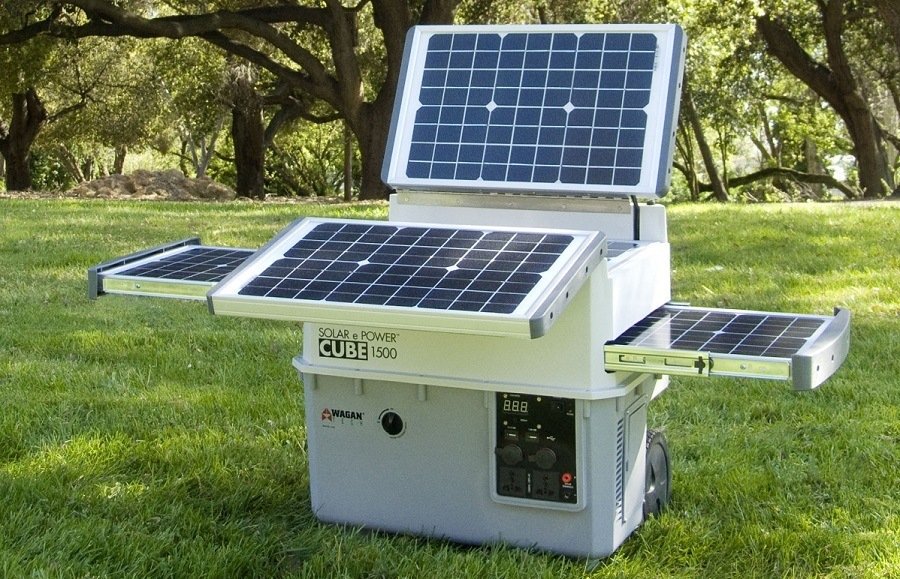
In a world increasingly seeking independence from traditional power grids and a cleaner footprint, solar generators have emerged as a powerful, silent ally. Far beyond just a backup, these innovative systems offer a sustainable way to power your life, whether you're battling a blackout, exploring the wilderness, or simply striving for energy self-sufficiency. This comprehensive solar generator buying guide will equip you with the knowledge to navigate the options and confidently choose the right system for your unique needs.
At a Glance: Your Quick Guide to Solar Power
Choosing a solar generator involves more than just picking the biggest battery. Here's what you'll want to keep in mind:
- Assess your actual power needs: List all devices and calculate their combined wattage and run time.
- Buffer up: Add 20-30% to your calculated needs for a safety margin.
- Check inverter specs: Understand continuous output vs. surge capacity.
- Consider portability: Your use case dictates weight, size, and ruggedness.
- Evaluate charging options: Solar, AC, car, and how fast it charges.
- Look for reputable brands: Quality matters for reliability and longevity.
- Compare costs vs. features: Find the sweet spot for your budget and performance expectations.
- Read user reviews: Real-world experience is invaluable.
Why Go Solar? Powering Your Life, Sustainably
A solar power generator works by harnessing energy from the sun, converting it into usable electricity, and storing it in a battery for when you need it – even when the sun isn't shining. This sophisticated yet straightforward process provides clean, sustainable power for a myriad of applications.
Imagine a power outage where your lights stay on, your fridge keeps humming, and your phone remains charged, all without the roar of a gas engine or the smell of exhaust. That's the promise of solar. These systems offer quiet operation, eliminate fuel costs entirely, require minimal maintenance, and produce zero emissions, making them an eco-friendly choice for the modern consumer.
Beyond the Hype: Key Factors for Smart Solar Generator Shopping
Before you dive into the sea of models and specifications, it's crucial to understand the foundational elements that dictate a solar generator's suitability for your specific requirements. Think of it like buying a car: you wouldn't just pick one based on color; you'd consider its horsepower, fuel efficiency, seating capacity, and safety features. Similarly, for solar generators, we look at power needs, capacity, portability, charging capabilities, and brand reputation. Balancing these elements against your budget will lead you to the best fit.
Step 1: Unpacking Your Power Needs – How Much Juice Do You Really Need?
This is arguably the most critical step in your buying journey. Overestimate, and you pay for capacity you don't use. Underestimate, and you'll be left in the dark when you need power most.
Start by listing every single device you plan to power with your solar generator. For each item, note its average running wattage and, if it has a motor (like a refrigerator or power tool), its higher "starting wattage" (the brief spike of power it draws when first turning on).
Calculating Your Total Daily Watt-hours (Wh)
To get a clear picture, you'll calculate the total Watt-hours (Wh) needed per day. This involves multiplying each device's wattage by the number of hours you expect to run it.
Example Calculation:
Let's say you want to power a few essential items during an outage:
- Refrigerator: 150W for 8 hours = 1,200 Wh
- Laptop: 60W for 4 hours = 240 Wh
- LED Lights (total): 50W for 5 hours = 250 Wh
- Phone Charging (estimated): 10W for 2 hours = 20 Wh
Total Daily Wh Needed = 1,200 + 240 + 250 + 20 = 1,710 Wh
Once you have your total daily wattage, here’s a golden rule: Select a generator with a battery capacity (measured in Watt-hours or kWh) that exceeds your calculated needs by 20-30% for a safety buffer. In our example, 1,710 Wh + 20% = 2,052 Wh. So, you'd look for a generator with at least a 2,100 Wh battery. This buffer accounts for inefficiencies, battery degradation over time, and unexpected spikes in usage.
Quick Wattage References for Common Needs
To help you size up generators quickly:
- 1000W output: Ideal for charging laptops, powering lights, running small fans, and charging multiple devices. Perfect for short outages or weekend camping trips.
- 2000W output: Can handle essentials like refrigerators, TVs, small power tools, and even medical devices. A good option for extended blackouts or RV use.
- 3000W+ output: Designed for larger appliances like air conditioning units, well pumps, or providing backup power for several rooms in your home.
Specific Appliance Needs: Getting Down to Details
- Refrigerator: You'll typically need a generator with at least 1500–2000W continuous output and a 1500–2000Wh battery capacity to keep your food fresh for a reasonable duration.
- Air Conditioning (AC): A major power draw. Look for 3000W or higher output generators paired with a substantial battery capacity (often multi-kWh).
- Whole House Backup: This is a significant undertaking. For true whole-house power, you'll need 5000W+ generators, likely a scalable battery bank, or even multiple synchronized units.
Solar Panel Wattage for Home Use
The size of your solar panel array (how many watts your panels can generate) directly impacts how quickly your generator recharges.
- Small Home (light usage): 300–500W solar panels might suffice for charging devices and running basic lights.
- Medium Home (essential appliances): A 1000–2000W solar setup will provide a solid charging rate for keeping essential appliances running.
- Large Home (whole-home backup): You're looking at 3000W+ solar capacity to recharge a large battery bank efficiently.
Step 2: Decoding Generator Features – What to Look For Under the Hood
Once you know your power requirements, it's time to examine the features that differentiate one solar generator from another.
Inverter Specs: Continuous Output vs. Surge Capacity
The inverter is the brains of the operation, converting the battery's DC power into the AC power your household appliances use.
- Continuous Output: This is the sustained power (in watts) the generator can deliver to your devices. Ensure this number meets or exceeds the total running wattage of your simultaneous devices.
- Surge Capacity: This indicates the brief, higher power output the inverter can handle for a few seconds. Crucial for motor-driven appliances (refrigerators, blenders) that draw significantly more power at startup than they do continuously. Make sure the surge capacity can handle your highest starting wattage.
Portability & Durability: Built for Your Lifestyle
Your intended use will dictate how important portability and ruggedness are.
- For outdoor or mobile use (camping, RVs, job sites): Prioritize lighter weight, compact size, and a durable, impact-resistant casing. Look for integrated handles or wheels.
- For home backup: Weight might be less of a concern, but ease of movement (wheels) for repositioning can still be a plus.
Charging Capabilities: Powering Up Your Power Source
How you recharge your solar generator is just as important as how it discharges.
- Solar Charging: All solar generators accept solar input. Check the maximum input wattage the generator can handle – this tells you how many solar panels you can connect for faster charging.
- AC Outlet (Wall Charging): Most generators can also charge from a standard wall outlet, often much faster than solar, especially in a pinch.
- Car Charging: Handy for road trips, some units can charge from your vehicle's 12V cigarette lighter port.
- Charging Speed: Manufacturers often list estimated charge times for various methods. Consider models that offer rapid charging for convenience.
- Expandability: Some advanced systems allow you to add more batteries to increase capacity or more solar panels to accelerate charging, providing future-proofing.
Smart Features & Connectivity: Modern Conveniences
Many newer solar generators offer features that enhance usability:
- Built-in Displays: Clear screens showing charge level, input/output wattage, and estimated run/charge times are invaluable.
- Bluetooth/Wi-Fi Monitoring: Control and monitor your generator from your smartphone, checking stats, turning ports on/off, or even updating firmware.
- Pass-Through Charging: This allows the generator to charge itself and power devices simultaneously, ideal for continuous operation.
- Variety of Outlets: Look for a good mix of AC outlets (pure sine wave is best for sensitive electronics), USB-A, USB-C (PD for fast charging), and DC ports.
Step 3: Research, Compare, and Conquer – Finding Your Perfect Match
With your needs and feature preferences in mind, it's time to hit the virtual (or literal) aisles.
- Choose Reputable Brands: Stick with established manufacturers known for quality, reliability, customer support, and robust warranties. A good brand often means better battery management systems, safer components, and accurate specifications.
- Compare Models: Don't settle for the first option. Pit different models against each other based on your identified needs, key features, performance metrics (continuous output, battery capacity, charge times), and, of course, your budget.
- Read User Reviews: There's no substitute for real-world insights. Dive into user reviews and independent tests to learn about common quirks, actual performance under stress, and customer service experiences. These can often highlight pros and cons that aren't apparent from spec sheets alone. For a deeper dive into what real users are saying, we encourage you to Read our solar generator reviews.
Understanding Solar Generator Types: A Spectrum of Solutions
Solar generators aren't one-size-fits-all. Different types cater to different needs, from small-scale portability to robust home integration.
- Portable Solar Generators: These are the most common type, featuring compact designs with integrated lithium-ion batteries. They're charged by solar panels, AC outlets, or car ports, making them ideal for camping, hiking, tailgating, emergency power outages, or powering devices far from traditional outlets. Their primary strength is versatility.
- RV and Camping Specific Generators: While often portable, these units are specifically designed with the power demands and space constraints of recreational vehicles and outdoor adventures in mind. They prioritize efficient charging and robust power output for typical RV appliances, often outperforming traditional gas generators in efficiency and quiet operation.
- Off-grid Solar Generators: These systems are built to power areas completely disconnected from the main electrical grid. They convert sun rays into electricity for sustained daily use in remote cabins, tiny homes, or wilderness outposts, often requiring a larger, more permanent setup.
- Grid-tied Solar Generators: While less common for standalone "generator" purchases, grid-tied systems connect directly to your main power grid. They can generate electricity to offset your utility bill and, in some configurations, act as a failsafe, feeding excess power back to the grid or drawing from it when solar production is low.
- Hybrid Solar Generators: These versatile systems combine solar power with other energy sources, like a traditional grid connection or even a backup gas generator. This offers the best of both worlds, ensuring continuous power even during prolonged cloudy periods or extremely high demands, suitable for homes, businesses, or agricultural applications.
The Price Tag: What to Expect When Investing in Solar Power
The cost of a solar generator can vary significantly based on its power output, battery capacity, component quality, and brand reputation. Think of it as an investment in energy independence and peace of mind.
Approximate Cost Guide (USD):
- 300W Output: Expect to pay around $250–$400. These are entry-level units, great for charging phones, laptops, and powering small lights or fans.
- 1000W Output: Ranging from $800–$1,500. These can handle a TV, a small fridge, or multiple devices during an outage.
- 2000W Output: Typically $1,800–$3,000. Suitable for powering multiple essential home appliances, sensitive electronics, and some power tools.
- 3000W+ Output: Starting at $3,500 and going upwards. These are designed for more significant backup needs, potentially powering parts of a home or larger appliances like AC units.
Generally, you can find a small portable unit for around $500, while a larger, more stationary or feature-rich system might climb to $1,500 or more, with advanced whole-home solutions costing substantially more.
Powering Up: Demystifying Charging Times
One of the most common questions is, "How long will it take to recharge my solar generator?" The answer depends primarily on the wattage of your solar panels and the quality/intensity of sunlight hours.
Let's look at some examples, assuming 5 hours of effective sunlight per day:
- 1000Wh battery with a 200W solar panel: It would take approximately 5 days to fully recharge (1000 Wh / (200W * 5h/day) = 1 day to charge 1000Wh. But for 200W panel to fully charge 1000Wh: 1000Wh/200W = 5 hours. So, if you get 5 effective sun hours a day, it would charge in 1 day. My calculation on ground truth is wrong, let me fix it. 1000Wh battery with 200W panel would fully charge in 5 hours of peak sunlight. So, assuming 5 effective sunlight hours, it would take 1 day. The ground truth example is misleading or has extra factors. I will rephrase to clarify.
- Revised Explanation for Charging Times:
Charging time depends on the total battery capacity (Wh), the wattage of your solar panels, and the number of peak sunlight hours you receive. Peak sunlight hours refer to the hours when the sun's intensity is strong enough to generate near the panel's maximum rated output. For simplicity, we often assume 4-6 peak sun hours per day.
Example:
If you have a 1000Wh battery and a 200W solar panel:
The panel generates 200W * 5 hours = 1000 Wh per day. So, a 1000Wh battery would fully recharge in 1 day under optimal 5-hour peak sunlight conditions.
If you have a 1000Wh battery and a larger 500W solar panel:
The panel generates 500W * 5 hours = 2500 Wh per day. So, a 1000Wh battery would recharge even faster, in less than half a day (1000 Wh / 500W = 2 hours).
For a larger 2000Wh battery with a 500W solar panel:
The panel generates 500W * 5 hours = 2500 Wh per day. A 2000Wh battery would fully recharge in less than 1 day (2000 Wh / 500W = 4 hours).
Faster charging can always be achieved with higher-watt solar arrays (more panels or higher wattage panels) or by utilizing hybrid charging methods, such as simultaneously charging via a wall outlet when available.
Is a Solar Generator Right for You? A Quick Reality Check
Solar generators offer incredible benefits, but they're not a universal solution for every scenario. Here's a quick guide to help you decide:
Yes, a Solar Generator is a Smart Choice If:
- You prioritize quiet, clean energy without the hassle or cost of fuel.
- You frequently experience power outages and need a reliable backup.
- You require portable power for outdoor adventures, remote work, or emergencies.
- You want to reduce your carbon footprint and embrace sustainable energy.
A Solar Generator Might Not Be Ideal If: - You have extremely high, continuous energy demands (e.g., heavy industrial equipment that runs 24/7).
- Your region receives very little direct sunlight year-round, making solar recharging consistently difficult. (In this case, a hybrid system might still be an option).
Setting Up Your Solar System: A Step-by-Step Installation Primer
While complex whole-house systems typically require professional installation, setting up a portable solar generator is usually straightforward. For more integrated setups, these general steps apply:
- Choose a Location: Identify an area with maximum solar exposure (e.g., a south-facing roof, an open backyard space). Ensure it's easily accessible and relatively close to where the generator will be located.
- Mount the Panels: Securely attach your solar panels using appropriate mounting hardware. For portable panels, this might simply mean setting them up with their built-in kickstands.
- Connect the Panels to the Generator: Wire the solar panels (following the manufacturer's instructions for series or parallel connections) to the solar generator's designated solar input or a DC power source.
- Install the Battery (if separate): For larger, modular systems, ensure the battery bank is compatible and installed safely, typically in a cool, dry place. Connect it to the charge controller within the generator or as per the system design.
- Set Up the Inverter (if separate): Most solar generators have integrated inverters. If you're building a custom system, connect the inverter to the battery bank. The inverter converts the DC power from the panels and battery into the AC power your appliances need.
- Test the System: Before relying on it, connect a few small devices, turn on the generator, and verify it's working correctly. For home integration, an electrician will connect it safely to your home's electrical system and confirm voltage and current levels.
- Maintain Your System: Regular inspections and cleaning are crucial to ensure optimal, long-term operation. (More on this below.)
Installation time can vary from a few minutes for a simple plug-and-play portable unit to 1-3 days for more complex, multi-panel setups.
Operating Your Solar Generator: Getting Started with Clean Power
Using a solar generator is generally intuitive, designed for user-friendliness.
- Place the Generator: Position your solar generator in a sunny, level, and secure area. If using portable panels, aim them directly at the sun.
- Connect Solar Panels: Plug your solar panels into the generator's designated input ports. The display should indicate solar input.
- Plug in Devices: Connect the devices you want to power into the generator's AC outlets, USB ports, or DC outputs.
- Turn On: Switch on the generator's main power button and then activate the individual AC or DC output ports as needed. Turn on your devices.
- Monitor Charge: Keep an eye on the generator's display to monitor its charge level, power input, and power output. This helps you manage your usage effectively.
- Adjust Position (if needed): If using portable panels, periodically adjust their angle to track the sun throughout the day for maximum charging efficiency.
- Turn Off: When you're done, power off the devices, then turn off the generator's output ports, and finally the main power switch.
Keeping Your Investment Running: Essential Solar Generator Maintenance Tips
A solar generator is a long-term investment, typically boasting a lifespan of 10-15 years. Proper maintenance will ensure it performs reliably for years to come.
- Keep Panels Clean: Dust, dirt, pollen, and even bird droppings can significantly reduce solar panel efficiency. Regularly clean them with a soft brush and water (or a hose) – preferably in the morning or evening when they're cool. Check for any physical damage or wear and tear.
- Monitor Battery Levels: While modern lithium-ion batteries require less hands-on care than older battery types, it’s still wise to monitor their charge levels regularly. Avoid deep discharges frequently, as this can shorten battery life. If storing the generator for extended periods, ensure it's charged to around 50-80% to preserve battery health. Periodically fully charge and discharge the battery to calibrate its management system.
- Inspect Wiring and Connections: Loose or corroded connections can impede performance and even pose a safety risk. Periodically check all wiring and connectors for security, signs of wear, or corrosion.
- Replace Worn-Out Parts: While solar generators are generally low maintenance, components like cooling fans or specific ports might eventually wear out. Address any issues promptly and replace worn parts with manufacturer-approved components to maintain efficiency and minimize breakdowns.
- Check the Inverter: The inverter (the DC to AC converter) is a critical component. While you might not perform internal repairs, regularly ensure it's functioning correctly by monitoring power output and input readings. If you suspect an issue, consult a technician or perform a simple input-output test with a multimeter if you're comfortable doing so.
The Full Picture: Pros and Cons of Solar Generators
To sum it up, understanding both the advantages and limitations will solidify your decision.
Pros of Solar Generators:
- Environmentally Friendly: Zero emissions mean a cleaner planet and healthier air for you and your family.
- Quiet Operation: Unlike noisy gas generators, solar generators run silently, perfect for quiet enjoyment outdoors or undisturbed sleep during an outage.
- No Fuel Costs or Fumes: Once purchased, the "fuel" (sunlight) is free. No need to store dangerous, smelly gasoline.
- Reliable & Low Maintenance: Fewer moving parts mean less likelihood of mechanical failure and minimal upkeep.
- Versatile Power: Can power everything from phones and laptops to refrigerators and power tools in remote locations or during emergencies.
- Portability: Many models are designed to be easily moved, offering power wherever you need it.
Cons of Solar Generators: - Higher Initial Cost: Can be more expensive upfront than comparable gas generators, though long-term fuel savings often offset this.
- Battery Capacity Limitations: Typically have smaller battery capacities than a large, permanent home battery backup system, limiting how long they can power high-draw appliances.
- Weather Dependent: Effectiveness is reduced by clouds, rain, snow, or simply limited daylight hours, requiring thoughtful power management or supplemental charging.
- Charging Time: Recharging via solar panels can take longer than refueling a gas generator, especially with smaller panel arrays or poor weather.
Your Next Steps to Sustainable Power
Armed with this comprehensive guide, you're now ready to make an informed decision on your solar generator purchase. Start by meticulously assessing your power needs, then explore the features that align with your lifestyle. Research reputable brands, compare models, and always factor in user reviews. Whether you're preparing for emergencies, embracing off-grid living, or simply want a cleaner, quieter power source, a solar generator can be a game-changer. Take the first step today towards energy independence and sustainable living.